

Free email course for parents
Teach Your Child to Play Independently with
The Independent Play Kickstart
Helping you nurture calm, confident, independent play (so you can finally reclaim time, peace, and presence at home).
The loss of three hours
It doesn’t sound like much, does it? Just three hours.
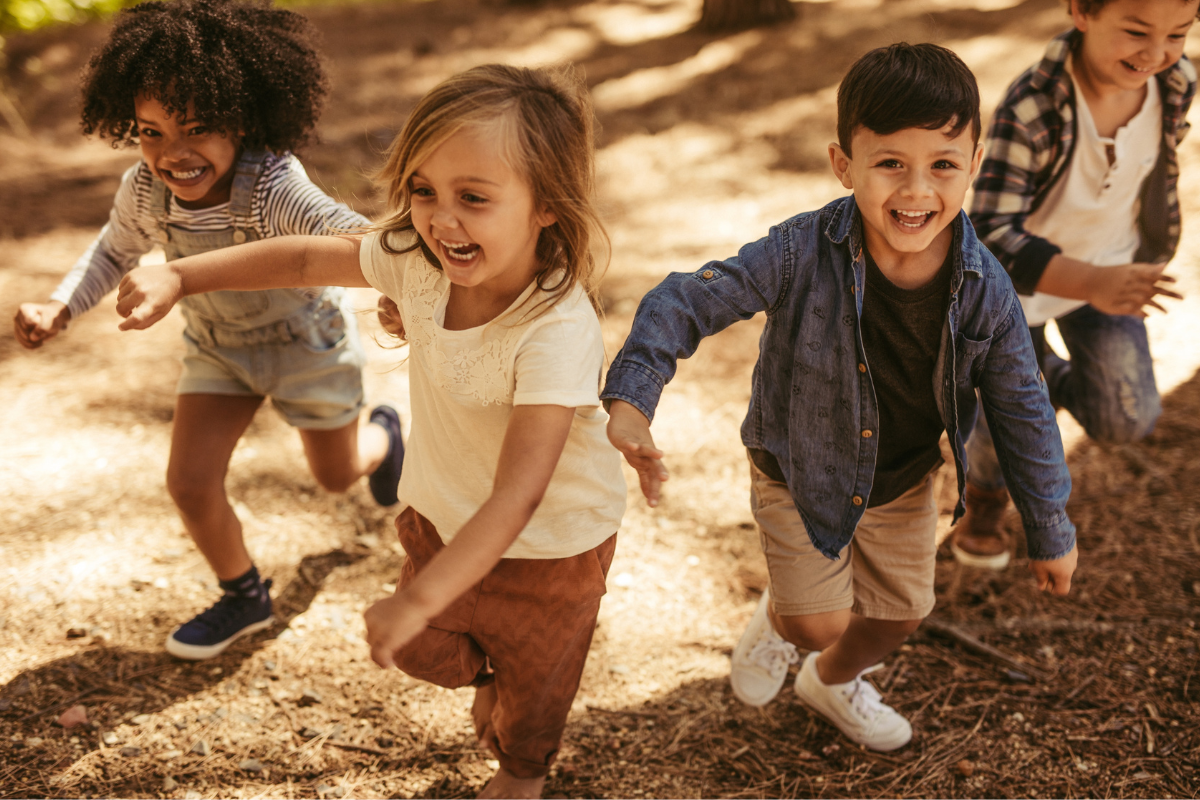
But research shows that in just one generation, children have lost three hours a day of free play. Three hours that used to be spent climbing trees, riding bikes, or making cubbies in the backyard. Today those hours are swallowed by screens, structured activities, or simply lost to the rush of modern family life.
Recent Australian Early Development Census (AEDC) data paints a worrying picture: almost half of all 3–5 year olds are now developmentally vulnerable in at least one key domain. That’s not just statistics. It’s children showing up at school without the social, emotional, and physical readiness they need to learn.
And as a teacher, I see the impact firsthand.
Childhood, then and now
When I first started teaching kindergarten more than a decade ago, children arrived bright-eyed and playful. They might not have recognised letters or numbers, but they knew how to take turns, how to negotiate a game, and how to sit in a group and listen to a story.
Now, many arrive with far greater challenges:
- Meltdowns over simple group games
- Inability to sit still for even a few minutes
- Difficulty tolerating disappointment or loss
- Weak motor skills that make writing or even holding scissors hard
- Poorer speech and language development
These shifts have happened in just 10–15 years — not across centuries. Something fundamental about childhood has changed.
The culprits behind the loss of play
So what has caused play to disappear?
- Screens
Children spend more time than ever in front of devices. The latest figures suggest that by the age of 8, the average child has spent more time on screens than in school. Screens are not inherently “bad,” but they crowd out unstructured, imaginative play that can’t be replaced. - Overscheduled lives
Sports, tutoring, after-school care, enrichment classes — many families are caught in a cycle of constant activity. While some of these are valuable, they often leave little room for the kind of slow, unstructured play that fosters resilience and creativity. - Parental pressures
Parents today are under immense stress. With work, household demands, and the pressure to “get it right,” it’s easy to default to what feels easiest in the moment — a screen, a structured program, or staying indoors. - Safety fears
Compared to past generations, children spend far less time roaming outdoors independently. Concern for safety has kept kids closer to home, and often, closer to screens.
Why this matters
The decline in play is not a small issue — it’s a cultural crisis. Play is not just “fun”; it’s how children develop the very skills they need for life.
- Through play, they learn emotional regulation (handling frustration when a block tower falls).
- They develop executive function (planning, problem-solving, negotiating rules).
- They build resilience (falling, trying again, persisting).
- They grow language and social skills (telling stories, role-playing, navigating friendships).
Without play, children are more anxious, less resilient, and less prepared for both school and life.
What parents can do
The good news? Parents don’t need to buy more toys or sign their children up for special programs to restore play. The answer is far simpler — and cheaper.
- Create protected time
Just as we protect time for meals or sleep, we need to protect time for play. Unstructured, child-led play should be a daily rhythm, not an occasional treat. - Prioritise outdoor time
Even 20 minutes outdoors has been shown to reduce stress and boost attention in children. Nature offers the best toys of all — sticks, rocks, trees, dirt, and open space. - Allow boredom
It’s tempting to rush in when a child says, “I’m bored.” But boredom is the spark for creativity. Give children space to feel it — they will soon invent their own worlds. - Model balance
When children see adults constantly on screens or rushing from one task to the next, they absorb the message. Model slowness, conversation, and joy in small things.
A disappearing childhood can be reclaimed
The modern world is stealing childhood. But parents have the power to reclaim it. By protecting play, we are not just giving children fun. We are giving them the building blocks of resilience, learning, and joy.
One day, our children will look back on their childhoods. Will they remember endless scrolling and rigid schedules, or the smell of fresh air, the thrill of running until sunset, and the quiet joy of getting lost in their own imagination?
The choice, as parents, is in our hands.

Free email course for parents